

What if two cars booked for a logbook service leave with different checklists? That’s because what happens during logbook servicing depends on the vehicle’s make, model and place in its manufacturer’s schedule. It’s more than a routine oil change, and the exact tasks can vary from one service interval to the next.
It’s understandable to want a clear idea of what’s included, especially if you’re concerned about unexpected repairs or aren’t sure what a service record is telling you. At Glasshouse and Landsborough Automotive Service and Repairs, logbook servicing follows manufacturer specifications and includes scheduled maintenance, preventative checks, fluid changes and a vehicle health report.
This guide explains the usual steps, the checks a technician may carry out and how to understand the findings. You’ll also learn what information to bring, what to expect after the service and how to distinguish scheduled work from additional recommendations. Use your owner’s manual or manufacturer schedule to confirm your vehicle’s specific intervals and tasks, then discuss any findings with the workshop.
Key Takeaways
- What happens during logbook servicing depends on your vehicle’s manufacturer schedule, so use the owner’s manual to understand which tasks are due.
- The usual process includes reviewing vehicle details and service history, completing scheduled maintenance and checks, then recording the work.
- Checks and fluid changes can differ by vehicle and service interval, so examples are not a universal checklist.
- A logbook service covers scheduled maintenance, not every repair a vehicle might need. Use the vehicle health report to understand findings and recommended attention.
- Bring your logbook, service records and a clear description of any concerns to make your Landsborough service visit more useful.
What happens during logbook servicing, and why does the schedule matter?
A logbook service is scheduled maintenance carried out according to the requirements set by the vehicle’s manufacturer. The schedule guides which maintenance tasks are due at each point in the vehicle’s life, rather than relying on a one-size-fits-all checklist. The exact work can depend on the make, model, age, distance travelled and service interval.
A logbook guides the service by recording the manufacturer’s maintenance schedule and the work completed against it. That makes it different from a standalone oil change or a general repair visit. An oil change may be one scheduled task, while a repair visit focuses on a reported fault. A logbook service follows the maintenance requirements due for that vehicle.
Understanding what happens during logbook servicing starts with the schedule, not assumptions about what every car needs. The technician uses the relevant requirements to guide the service, and the owner’s manual is the practical reference for checking what is due. A written record also helps you see what has already been completed and keep track of upcoming maintenance.
What does the vehicle logbook tell you?
A paper logbook or service schedule typically sets out maintenance due at different time or distance points and provides space to record completed services. Look in the owner’s manual for the servicing section, schedule or maintenance table. The next due point is usually identified by a kilometre reading, a time period, or both. Follow the instructions for your specific vehicle rather than estimating from a generic guide.
Some vehicles use digital service records instead of a paper book. The format may differ, but the purpose is similar: to document servicing and help track scheduled maintenance. If you have a digital record, bring the service information you can access, along with details of work carried out elsewhere.
Why can two logbook services be different?
Manufacturers set maintenance tasks for each vehicle and vary them across service intervals. One visit may focus on routine scheduled maintenance, while another may call for additional replacement items or checks. The vehicle’s age and distance travelled can also affect what is due. That is why two cars, or even two visits for the same car, may have different service requirements.
Time and distance can both matter. A vehicle that travels relatively few kilometres may still reach a time-based service point, while a high-use vehicle may reach a kilometre-based point sooner. Your manual explains how the schedule applies to your vehicle, including whether it uses a time interval, a distance interval or both. Check it before booking and share the current odometer reading with the workshop.
For example, don’t assume that a particular fluid change or replacement part is included every time. It may be due at one interval but not another, depending on the manufacturer’s instructions. A careful logbook service follows the applicable schedule, with tasks tailored to the vehicle rather than promised as a universal checklist.
What happens during a logbook service, step by step?
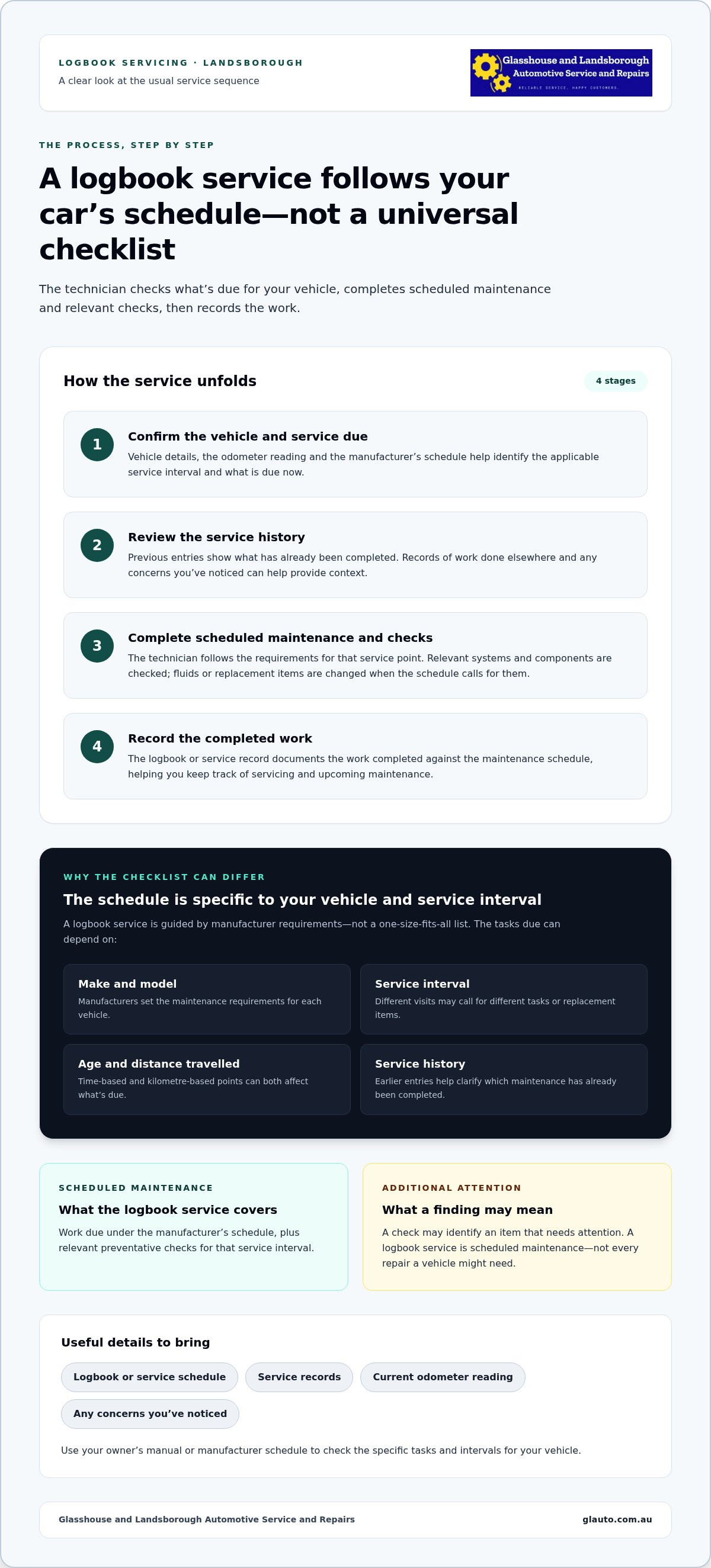
A logbook service follows a practical sequence, but the work is guided by your vehicle’s manufacturer schedule and service history. The technician uses those details to identify what’s due, carry out scheduled maintenance and checks, then record the completed work. The checklist differs between vehicles because their requirements differ.
Checking the service schedule and history
Before work begins, the technician needs to identify the vehicle and the relevant service interval. Bring the logbook, any service records you have and details of maintenance completed since the last visit. These records help show what has already been done and provide context if a task or entry needs clarification. Tell the workshop about any concerns you’ve noticed, too.
Completing scheduled maintenance and checks
The technician follows the applicable manufacturer requirements for maintenance and preventative checks. Fluids are changed or checked where the schedule calls for it, rather than automatically at every service. The inspection can cover relevant systems and components, with the actual work shaped by the vehicle’s schedule and what the technician observes.
In short, a logbook service involves checking the vehicle and its service history, following the maintenance due for that interval, carrying out relevant checks, and recording the completed work.
- Confirm the vehicle and service due. The technician uses vehicle details, the odometer reading and the service schedule to identify the applicable interval. This helps distinguish tasks due now from work recorded at an earlier visit.
- Review the service history. Previous entries provide useful context. If you’ve had maintenance carried out elsewhere or have additional records, sharing them helps the technician understand what has already been completed.
- Carry out scheduled maintenance. The technician completes the tasks specified for that service point. This may include fluid changes or replacement items when required by the manufacturer, but those tasks aren’t universal inclusions.
- Perform preventative checks. Relevant vehicle systems and components are assessed as part of the scheduled service. Findings can help identify items that may need attention, but an observation doesn’t automatically mean extra repair work is included in the scheduled maintenance.
- Record what was done. Completed work is documented in the vehicle’s service record, whether it’s a paper logbook or a digital record. Keep the updated record with your vehicle information so it’s available as a reference for the next service.
A written vehicle health report can help explain what the technician observed and which items may need attention. Review it alongside the service record, and ask for clarification if a recommendation isn’t clear. At the Landsborough workshop, manufacturer-specified logbook servicing follows the vehicle’s requirements, with scheduled maintenance, preventative checks, fluid changes and a health report guided by the service due.
What checks and fluid changes may a logbook service include?
Part of understanding what happens during logbook servicing is knowing that examples aren’t a guaranteed checklist. The technician refers to the manufacturer’s requirements for your vehicle and service interval, then carries out the scheduled maintenance and preventative checks that apply. A fluid or component may be due at one interval and not another, so the owner’s manual and service history matter more than a generic list.
Common maintenance items depend on the vehicle
An engine oil and filter change is a familiar example, but it’s only carried out when required by the relevant schedule. Other vehicle-dependent tasks may involve checking or changing specified fluids, or replacing a component that’s due. The schedule sets the requirements, including the type of fluid or part where specified. Don’t assume every logbook service includes the same replacements.
Depending on the vehicle, schedule and interval, maintenance may involve:
- Changing engine oil and the oil filter, if due.
- Checking or changing specified fluids, such as coolant, brake or transmission fluid, where the manufacturer’s requirements call for it.
- Replacing scheduled items such as an air filter or spark plugs, if they’re due for that vehicle.
These are examples, not a universal package. A fluid might need inspection at one service and replacement at another, while a component may not be due at all. The correct requirement comes from the vehicle’s maintenance information, rather than assumptions based on its age or the work performed on another car.
What preventative checks are designed to identify
Preventative checks help assess the condition of relevant vehicle systems and may bring wear, leaks or developing concerns to the technician’s attention. Depending on the scheduled work, examples could include looking at brakes, tyres, steering or suspension. The areas checked can vary, so treat these as possibilities rather than promised inclusions at every visit.
A check is not the same as a diagnosis or repair. For example, an inspection may identify visible brake wear or a fluid leak, but investigating the cause or repairing the fault may be separate work. The finding should be explained in context: whether it relates to a scheduled maintenance requirement, an observed condition, or a concern that needs further attention.
Recommendations are most useful when they’re connected to a clear reason. Ask what the technician observed, how it relates to the vehicle’s schedule or condition, and whether the item is scheduled maintenance or additional work. A written vehicle health report can help you follow the explanation and keep a record of recommendations.
This distinction makes it easier to understand what the service covered without assuming every observation is an urgent repair. Scheduled work follows the manufacturer’s requirements; other work should relate to a finding and be explained separately, so you can make an informed decision about what happens next.
What if the mechanic finds a problem during logbook servicing?
A logbook service covers the maintenance scheduled for your vehicle, but it doesn’t automatically include every repair it may need. A preventative check can reveal wear, a leak or another concern outside the scheduled tasks. The technician can explain what they’ve observed and what follow-up may be appropriate, so you can understand the finding before deciding what to do.
Scheduled maintenance follows the manufacturer’s requirements; repair work is discussed separately when a check identifies a concern.
This distinction can make a service report easier to read. A note about a component’s condition isn’t automatically a diagnosis, a confirmed fault or an instruction to proceed with extra work. Ask the mechanic to explain the finding in plain language and outline any recommended next steps.
Understanding a vehicle health report
A vehicle health report can summarise checks carried out during servicing and note areas that may need attention. Read each item in context: a scheduled task is work required by the service schedule, an observation describes what the technician noticed, and a recommended repair is proposed follow-up based on the finding. The report helps keep these points clear, and the technician can explain any unfamiliar wording.
For each note, consider asking:
- Is this a scheduled maintenance task, an observation or a recommended repair?
- What did the inspection show, and what does that mean for the vehicle?
- Does the item need further diagnosis, or is the recommendation based on the observed condition?
These questions help separate what was completed as part of the logbook service from additional work that may be recommended. A brief description in a report can be useful, but it may not explain the full context on its own. Ask the technician to talk you through any finding you’re unsure about.
Deciding what follow-up is needed
Before deciding on extra work, ask the mechanic to explain the finding, why it matters and what the possible next steps are. The appropriate timing depends on the specific inspection findings and the technician’s advice, so don’t assume every recommendation has the same urgency. A clear discussion gives you a better basis for deciding how to proceed.
Additional repairs aren’t automatically part of scheduled servicing. The report can identify a concern and recommend attention, but the work should be discussed with you and approved before it proceeds. If a recommendation is unclear, ask what the repair involves and whether more diagnosis is needed to establish the cause.
Keep the report with your service records. It gives you a useful reference for follow-up conversations and helps you track what was observed, what was completed and what remains under consideration. If your vehicle is due for manufacturer-specified maintenance, you can book logbook servicing in Landsborough and discuss any concerns with the workshop.
What to bring and expect at a Landsborough logbook service
A little preparation can help the workshop understand your vehicle’s history and any concerns you’ve noticed. Bring the information you have, even if some service records are incomplete. The owner’s manual or logbook can help identify the relevant maintenance schedule, while your notes give the technician useful context beyond the scheduled work.
Before bringing your vehicle in
Have your logbook or owner’s manual and available service records ready. Before arranging the service, note any warning lights, unusual sounds, changes in how the vehicle drives or other concerns since its last visit. A short, specific description can help, such as when a noise occurs or whether a warning light stays on. Mention these details when arranging the service so the workshop knows what you’d like discussed.
- Your paper logbook or accessible digital service record.
- Available receipts or records of previous maintenance.
- Your current odometer reading and any known service history.
- A brief description of warning lights, sounds or changes you’ve noticed.
You don’t need to diagnose the issue yourself. Simply describing what you’ve observed helps the technician understand your concern and distinguish it from work due under the maintenance schedule.
Local logbook servicing with Glasshouse and Landsborough Automotive Service and Repairs
At Glasshouse and Landsborough Automotive Service and Repairs, logbook servicing follows manufacturer specifications. Scheduled maintenance, preventative checks and fluid changes are guided by the requirements for your vehicle and the service interval, rather than applied as an identical checklist to every car. The workshop also provides a vehicle health report, giving you written context about observations and recommended attention after the service.
Knowing what happens during logbook servicing can make it easier to arrive prepared and understand the information you receive afterwards. The work completed is recorded in your service history, while the health report can help you follow up on findings or ask for a plain-language explanation of a recommendation. If the technician notes an item requiring further attention, you can discuss what was observed and what next steps may be appropriate.
The Landsborough workshop serves vehicle owners in Landsborough, Glass House Mountains, Beerwah, Beerburrum, Peachester, Mount Mellum, Mooloolah Valley, Glenview, Bald Knob and Maleny. Bring your records, share your concerns and discuss the service findings with the team. If your vehicle is due for scheduled maintenance, arrange a logbook service with Glasshouse and Landsborough Automotive Service and Repairs.
Make your next service easier to plan
Use your vehicle’s owner’s manual as a practical reference for keeping maintenance on track, and set a reminder to review the schedule as the next service approaches. Keeping service records together can also make future visits easier to prepare for, especially if you need to explain a concern or refer back to an earlier recommendation.
Understanding what happens during logbook servicing gives you a useful starting point for a straightforward conversation with your mechanic. You don’t need to know the technical answer before you arrive. Bring your questions, describe what you’ve noticed and take time to understand any findings before deciding on follow-up work.
For drivers in Landsborough, Glasshouse and Landsborough Automotive Service and Repairs offers a local place to discuss your vehicle’s scheduled maintenance. Arrange logbook servicing with our Landsborough workshop and take the next step with a clearer idea of what your vehicle needs.
Frequently Asked Questions
How long does logbook servicing take?
There isn’t one standard time for every logbook service. The work due for your vehicle, its service interval and any additional concerns can all affect how long it takes. When arranging the booking, discuss the expected timing with the workshop. Mention any concerns beforehand so they can be considered alongside the scheduled work.
Does every logbook service include an oil and filter change?
No. An oil and filter change is carried out when it’s required by the manufacturer’s schedule for your vehicle and the service interval due. It may be specified for one service but not another. Check the maintenance schedule in your owner’s manual rather than assuming an oil change is included every time. The completed service record can help you see what was done at the visit.
Can a logbook service identify problems that need repairs?
Yes, checks during a logbook service may reveal a concern that needs further attention. For example, a technician might note visible wear or a leak. That observation doesn’t always establish the cause, so further diagnosis may be recommended. A vehicle health report can help you understand what was seen and what follow-up is suggested. Ask the mechanic to explain the finding and discuss any proposed repair work with you.
What should I bring to a logbook service?
Bring your owner’s manual or service record, any maintenance paperwork you have, and a note of concerns you’ve noticed. A warning light, unusual sound or change in how the car behaves can be easier to describe if you’ve noted when it occurs. You don’t need to know what’s causing it. Clear details help the workshop understand what you’d like discussed during the service.
Is a logbook service the same as a roadworthy inspection?
No. A logbook service follows the vehicle manufacturer’s maintenance schedule, while a roadworthy inspection is a separate type of assessment with a different purpose. A logbook service should not be treated as a substitute for a roadworthy inspection, or as confirmation that a vehicle has passed one. If you need a particular inspection, review the relevant Queensland requirements to understand which assessment applies to your situation.
What happens if I cannot find my vehicle logbook?
You can still prepare for a service without a paper logbook. Bring your owner’s manual, available service receipts and the vehicle’s registration details, and share any maintenance history you remember. Some vehicles use digital service records, so check whether yours has one. If records are incomplete, tell the Landsborough workshop what you know; those details can help provide context when identifying the maintenance due.
